Exhibitions
Step into a collection where horror legends, haunted relics, and unsettling curiosities come to life
Explore detailed horror dioramas, eerie artifacts, and mysterious displays inspired by classic monsters, haunted legends, and the strange corners of horror history.
The Diorama Collection

Before there were haunted artifacts, whispered stories, or flickering shadows in the corridors, there were the dioramas.
The Horror Museum itself was born from the acquisition of an extraordinary private collection featuring handcrafted miniature scenes created by the artists of Ravenous FX alongside work from another acclaimed Alberta special effects artist whose creations have appeared across film and television. Visitors may recognize Ravenous FX from productions such as the HBO series The Last of Us, the supernatural revival Ghostbusters:Afterlife, and the survival thriller Prey. Each piece in the collection was originally commissioned for a private collector whose fascination with cinematic horror bordered on obsession.
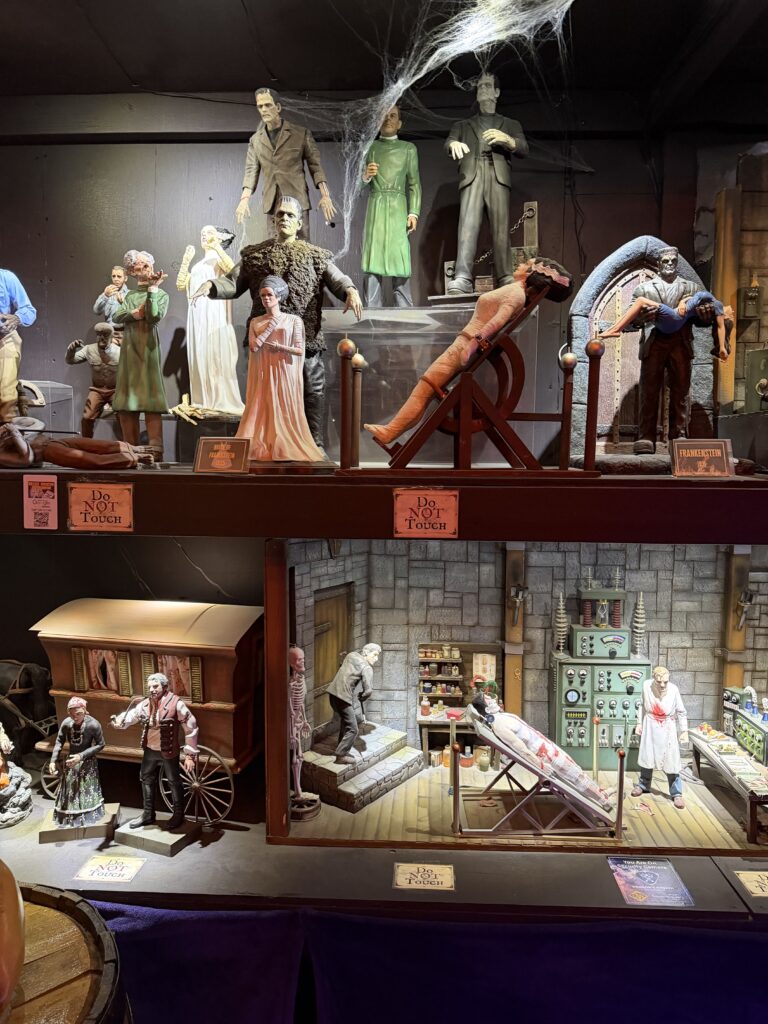
Painstakingly detailed and illuminated with eerie precision, the dioramas recreate iconic moments from some of the most influential horror and science fiction films ever made. Ancient castles loom beneath lightning storms. Laboratories hum with forbidden ambition. Giant creatures rise over doomed cities frozen forever in miniature catastrophe. From Dracula and Frankenstein to The War of the Worlds and King Kong, the collection serves as both a love letter to practical effects artistry and a shrine to the monsters that shaped popular culture.
Yet many guests find themselves lingering longer than expected before these displays. Perhaps it is the uncanny realism. Perhaps it is the feeling that, under the right lighting, some scenes appear almost…active. After all, horror has always depended on the simple question:
What if the things we pretend are fictional remember us too?
The Cabinet of Curiosities
Not every object in the museum demands attention with towering size or theatrical spectacle. Some of the most unsettling pieces can fit in the palm of your hand.
The Cabinet of Curiosities houses a rotating collection of smaller artifacts gathered from across the world, each carrying its own history, folklore, or lingering unease. Some are tied to forgotten rituals and vanished cultures. Others originate from sites marked by tragedy, conflict, death, or inexplicable experiences that continue to follow the objects long after they changed hands. Several pieces were once created as tools of protection. A handful are connected to stories so disturbing that even staff members disagree on how much should be shared publicly.
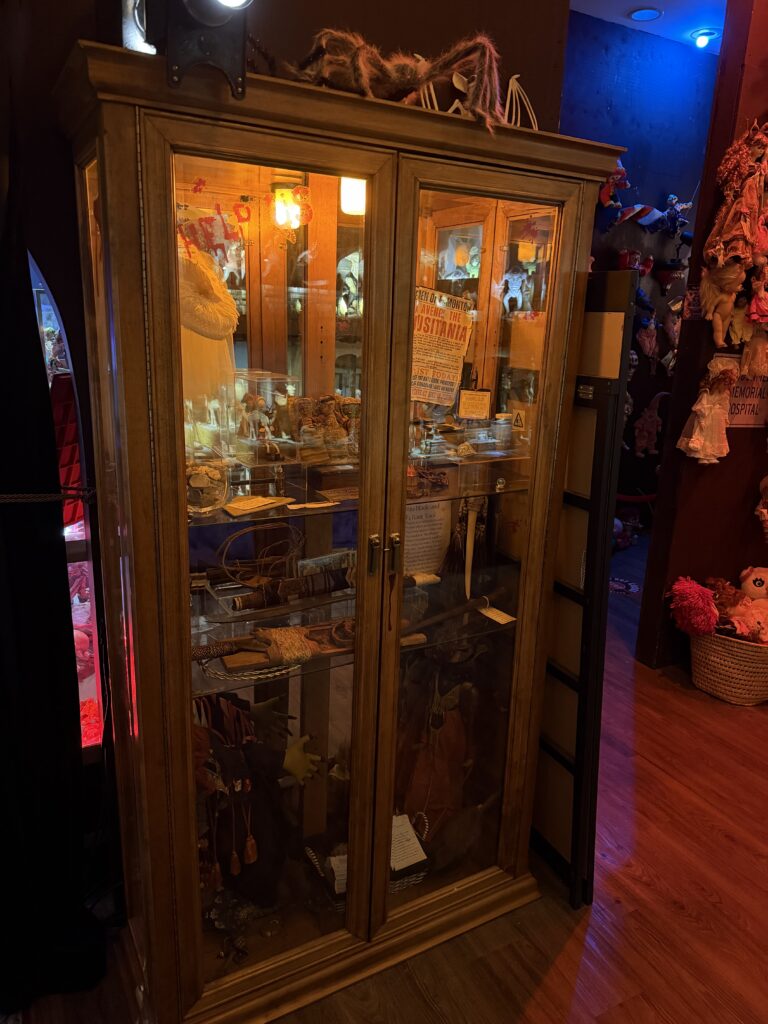
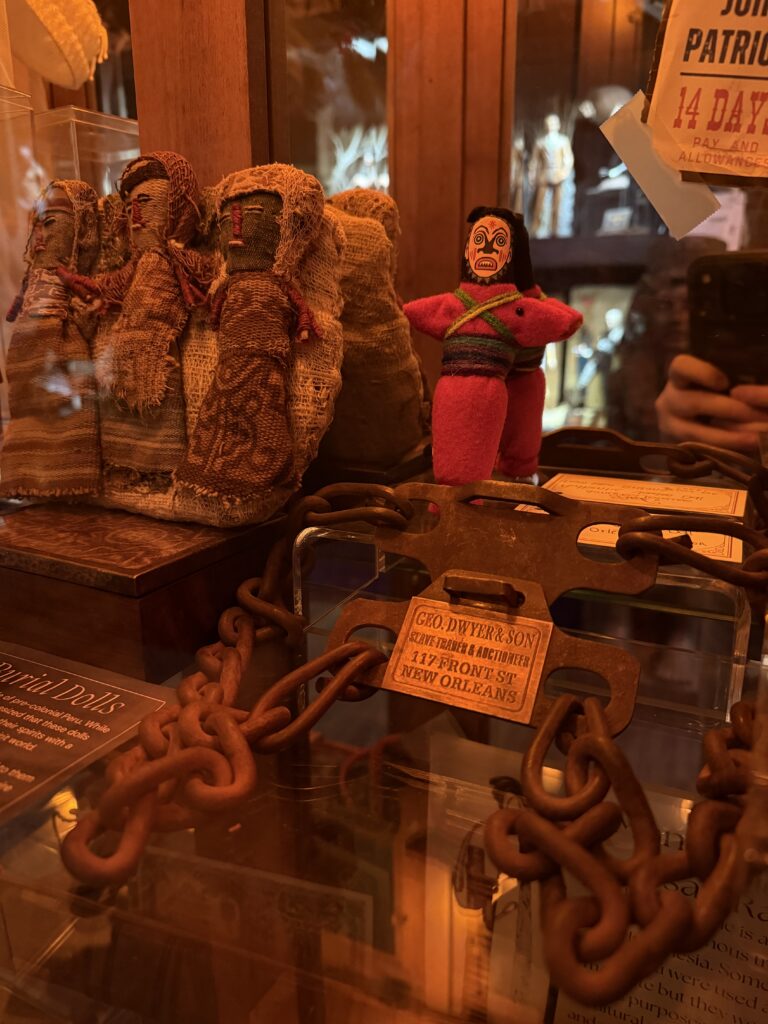
Within the cabinet are relics connected to ancient funeral practices, spirit work, folk magic, and colonial violence, sacred ceremonies, natural disasters, and the strange ways human beings attempt to preserve memory…or bury it. Visitors may encounter objects recovered from abandoned hospitals, demolished mortuaries, forgotten mountain towns, and private collections whose owners became convinced certain items should never remain in a home. Some artifacts are controversial for the questions they raise. Others are unsettling simply because no clear explanation has ever followed them.
The museum makes no claim that every item is haunted. Yet over the years, staff, investigators, sensitives, and guests have independently reported unusual experiences surrounding particular objects within the collection. Sudden cold spots. The sensation of being watched. Vivid dreams. Unexplained smells. Feelings of dread that appear without warning and vanish just as quickly.
Siam's Corner
In one quiet corner of the museum sits a figure that many guests instinctively avoid before they fully understand why.
The puppet known as “Siam” is believed to date back to the mid-19th century and originates from what is now known as Thailand. Very little is known with certainty about how it was first created, who owned it, or what purpose it may once have served. What is know is that the figure arrived at the museum with a reputation already attached to it, along with a long trail of uneasy reactions from those who encountered it too closely.
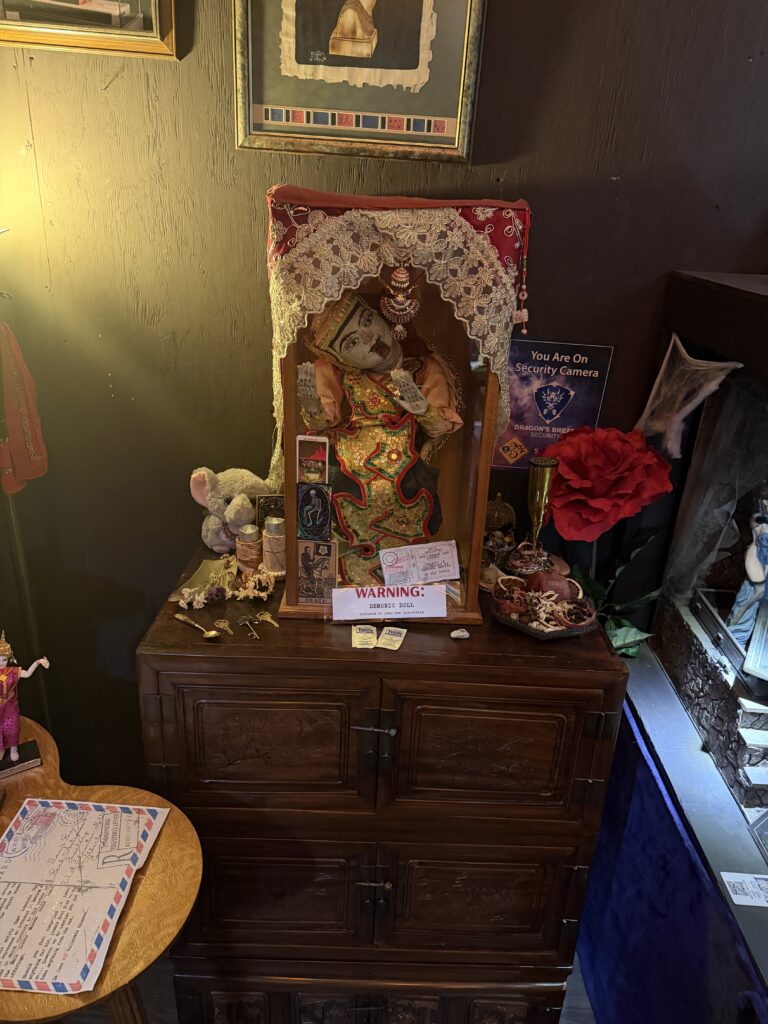
Over time, staff members began reporting a strange consistency in the experiences surrounding the display. Sudden headaches. Unexplained smells. Feelings of pressure or hostility in the room, and occassionally disembodied, almost feral sounds… Guests unfamiliar with the puppet’s history have occassionally reacted to the exhibit before noticing it visually at all, turning toward the corner as though something there had drawn their attention first. Others describe the unsettling sensation of having interuppted something private.
The display itself has changed several times since the figure entered the collection. Certain additions were made not for aesthetics, but because staff felt increasingly uncomfortable leaving the space as it originally was. Even now, there are small customs surrounding the exhibit quietly observed by employees and returning visitors alike. Some leave offerings. Some avoid speaking near it entirely.
The Doll Room
There are rooms in the museum that guests hurry through.
This is rarely one of them.
Inspired in part by the infamous Island of the Dolls, the Doll Room surrounds visitors on all sides with hundreds of faces suspended from the walls and ceiling, each frozen somewhere between childhood comfort and quiet unease. Some are antique. Some are modern reproductions. Some arrived with stories attached to them, while others earned their reputations only after entering the collection. Together, they create an atmosphere many guests describe as strangely overwhelming, as though the room itself is paying attention.
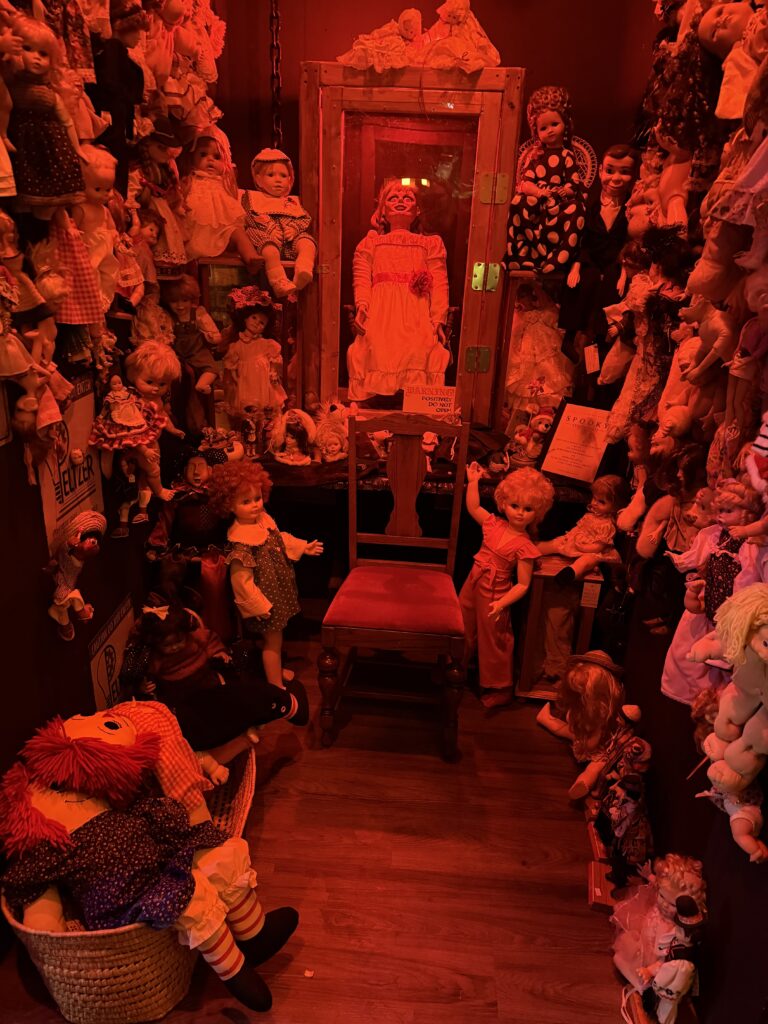
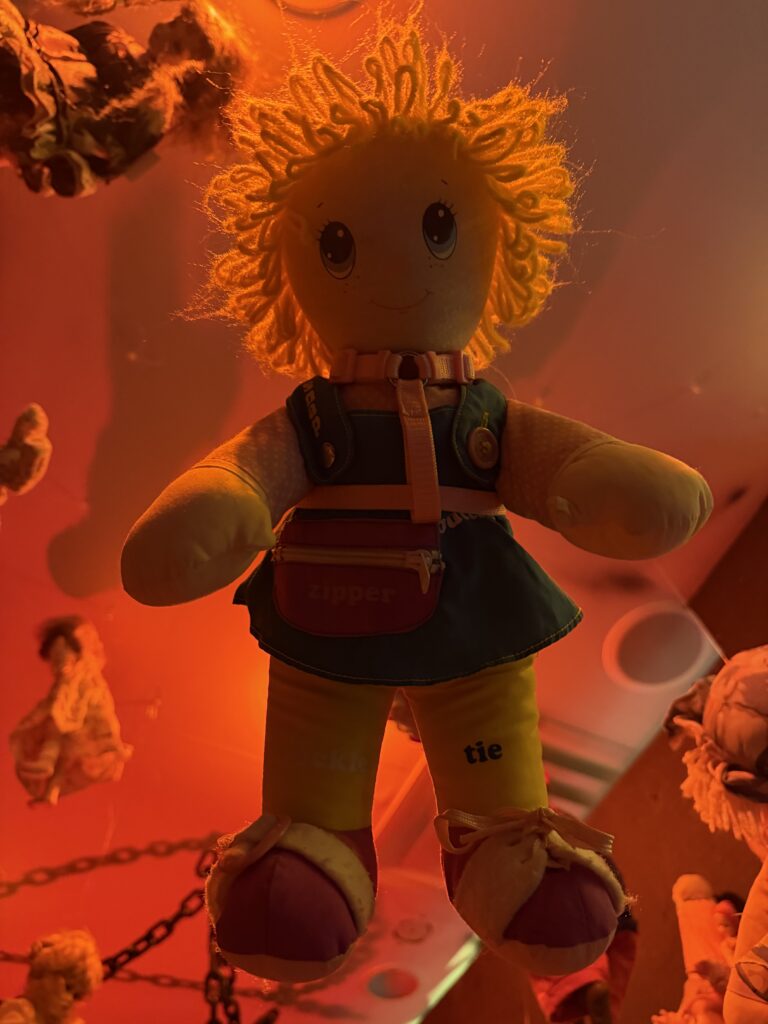
Not every doll here is believed to be haunted. Yet staff members have long noticed that certain figures seem to attract repeated experiences from unrelated visitors. Guests have reported feeling watched, hearing whispers where no one was standing, or noticing dolls facing different directions than moments before. Some visitors become immediately drawn to specific figures without understanding why. Others refuse to enter the room at all.
Among the collection are replicas tied to famous paranormal legends, vintage ventriloquist dummies with unsettling histories of their own, and dolls connected to stories of grief, attachment, and unexplained activity. a handful have become well known among returning guests and staff alike, each developing its own quiet reputation over time. Some are playful. Some seem territorial. A few are treated with notable caution.
Jack's Room
Beyond a cordoned entrance lined with warning signs sits the most restricted area in the museum.
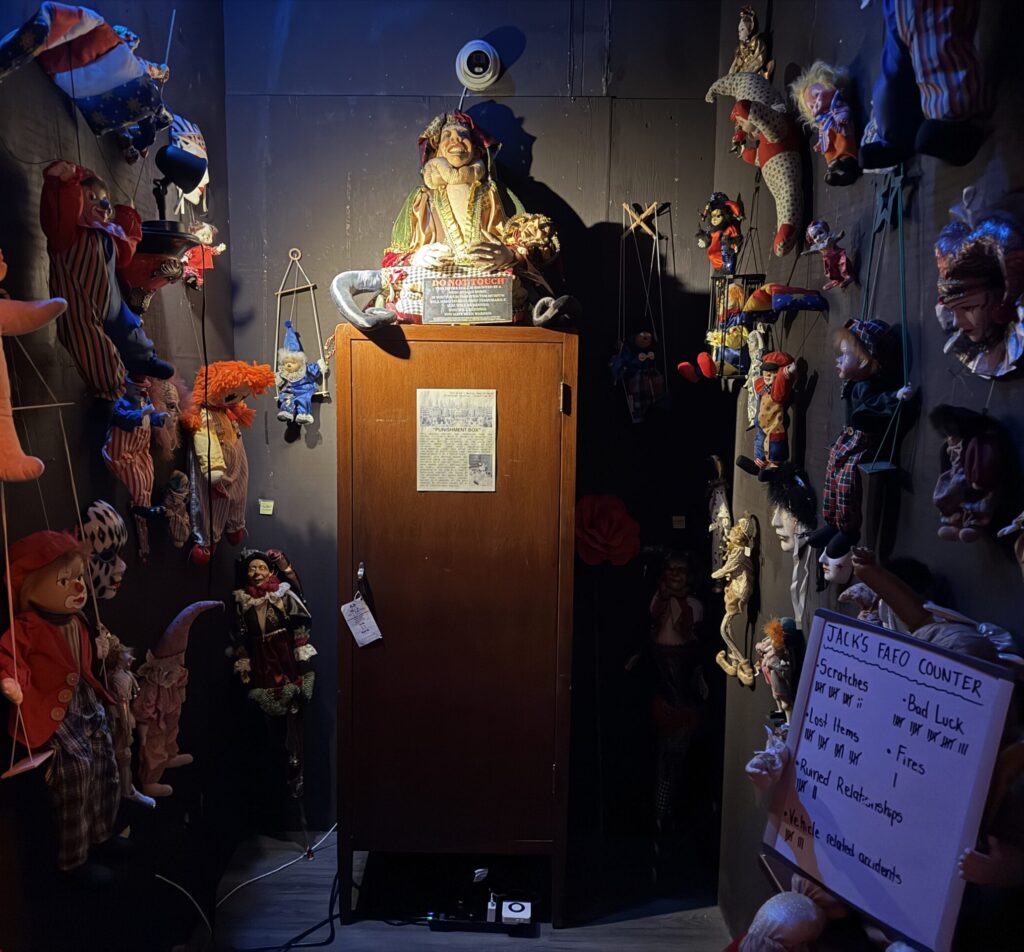
Known simply as Jack’s room, the exhibit houses a collection of clown figures, institutional artifacts, and recovered objects tied to unsettling histories across Canada, but the room exists for one reason above all others:
Jack.
From the moment the figure entered the collection, staff began documenting an unusual number of incidents connected specifically to the room. Employees tasked with maintaining the display noticed patterns emerging around those who ignored boundaries or treated the exhibit disrespectfully. Over time, the museum stopped treating the room like a conventional display and began treating it more like something that required a clear line and firm boundaries.
Today, visitors are only permitted to view the exhibit from a distance.
A rope barrier blocks entry into the alcove itself. Multiple warnings instruct guests not to cross the threshold or touch the display. An alarm system has even been installed for those who decide the rules do not apply to them. These precautions were not added as decoration. They were added because they became necessary.
Those who crossed the barrier and touched Jack have later reported an unusual string of misfortunes following their visit. Lost heirlooms and valuables. Deep scratches appearing without explanation. Relationships collapsing seemingly overnight. Unexplained fires. Vehicular accidents. Some returned shaken and eager to apologize. Others never returned at all.